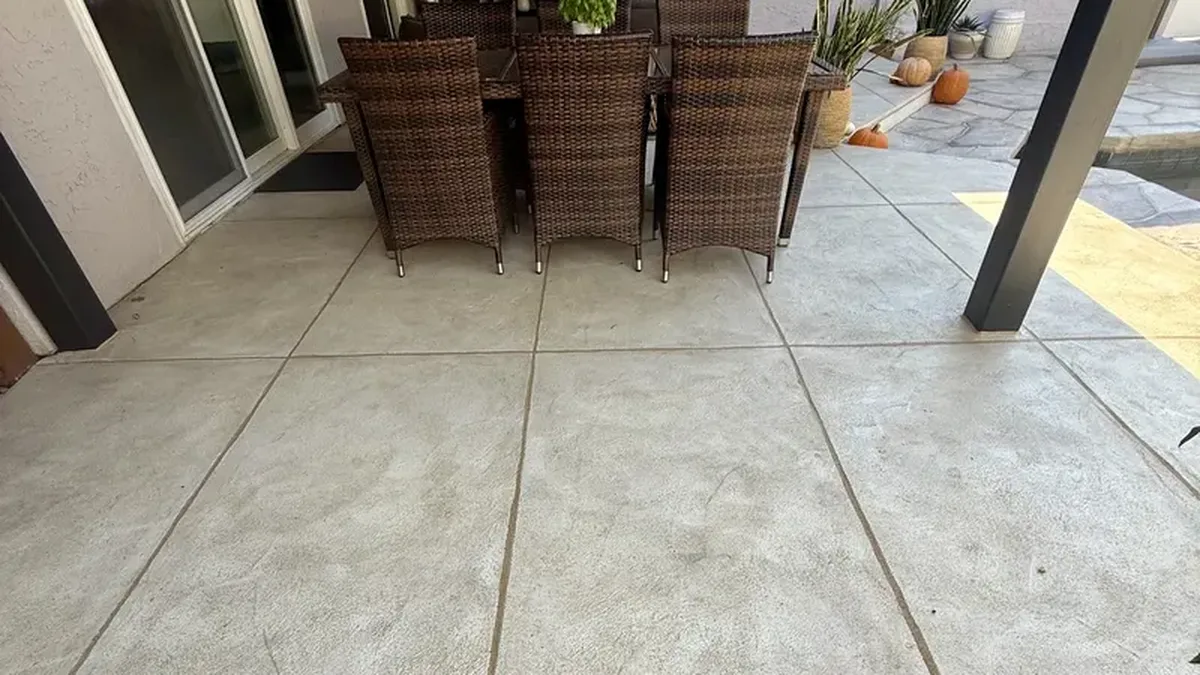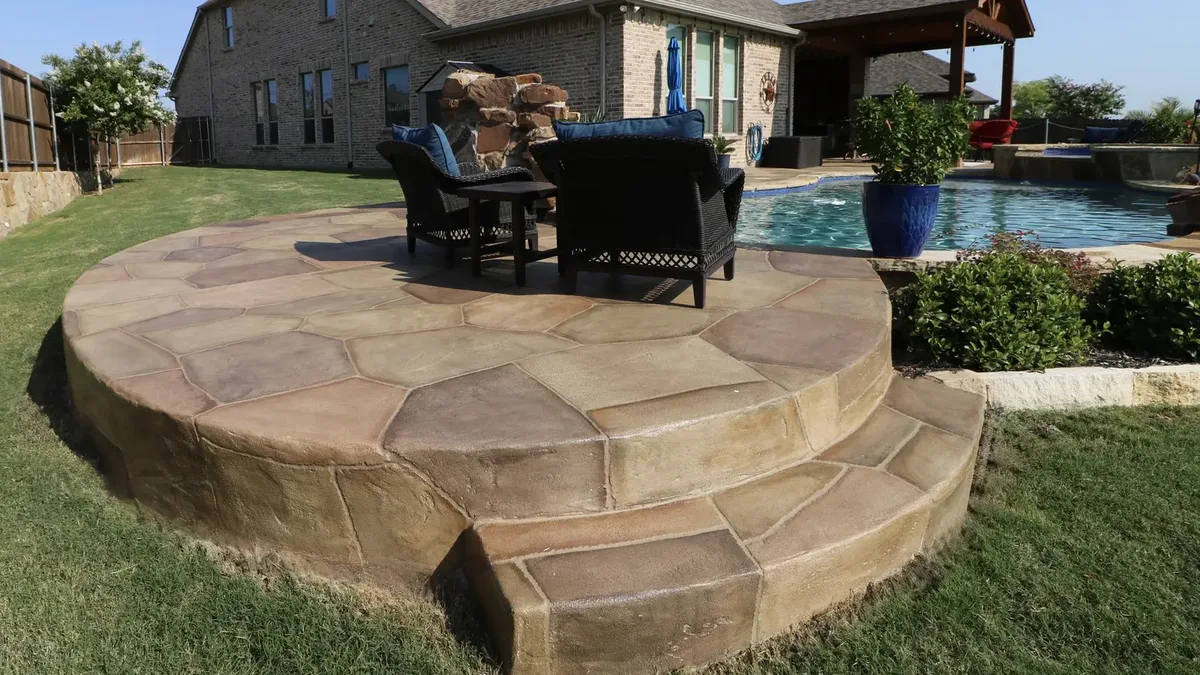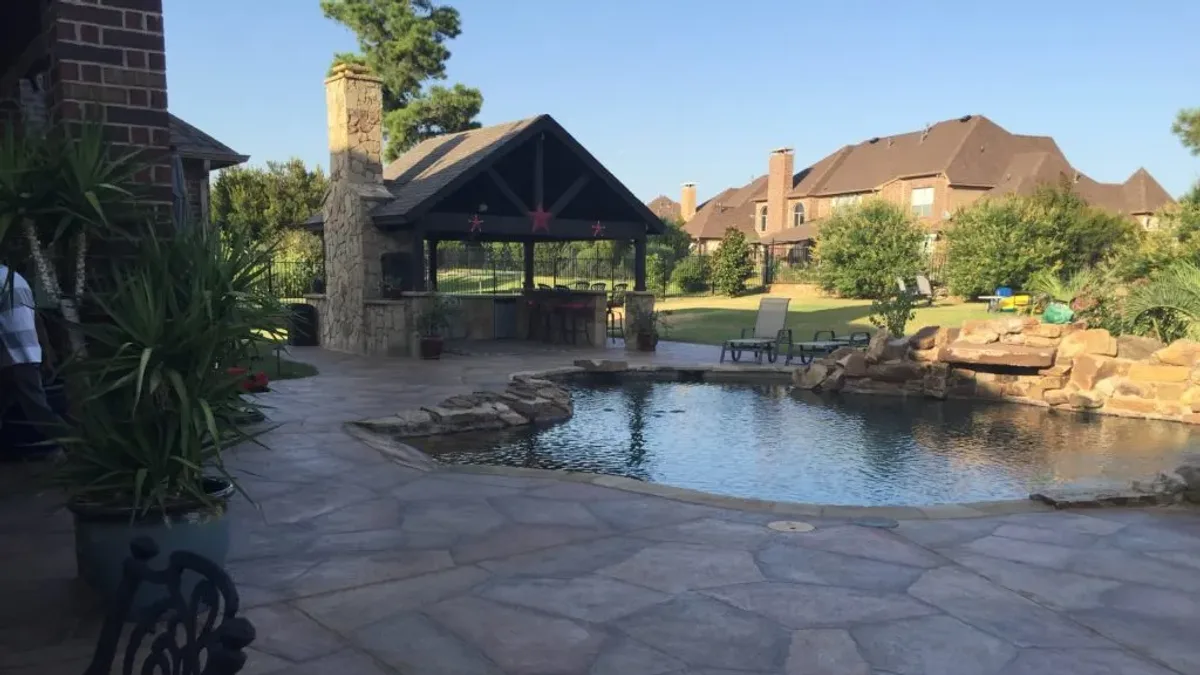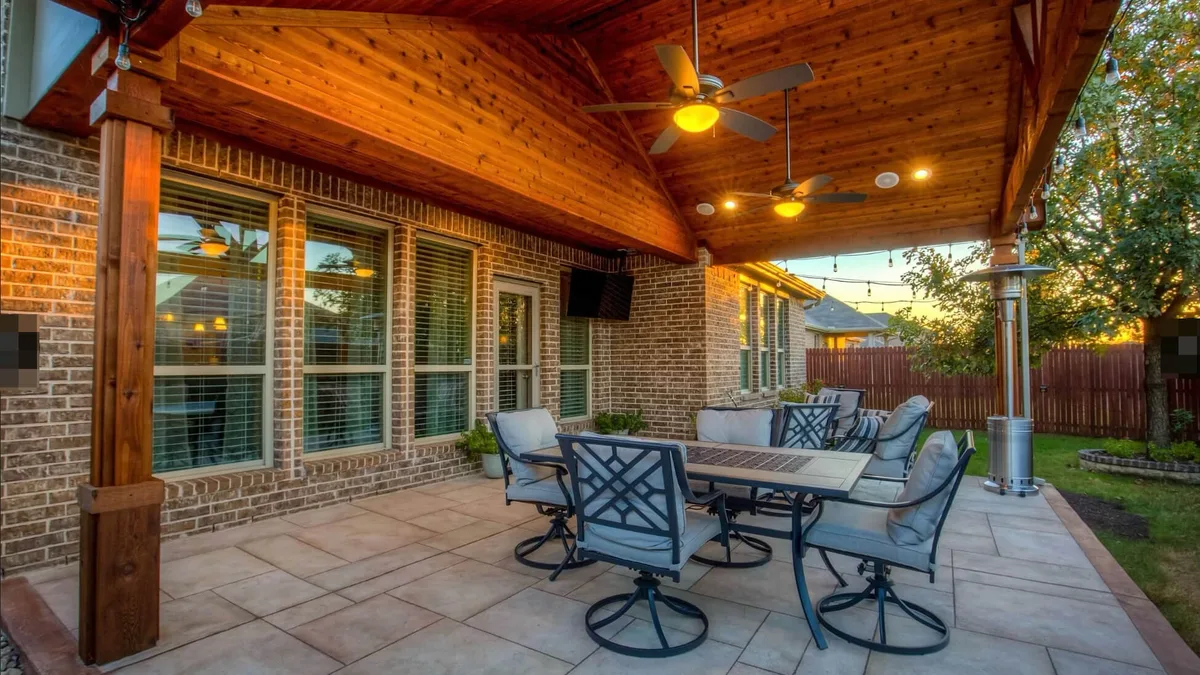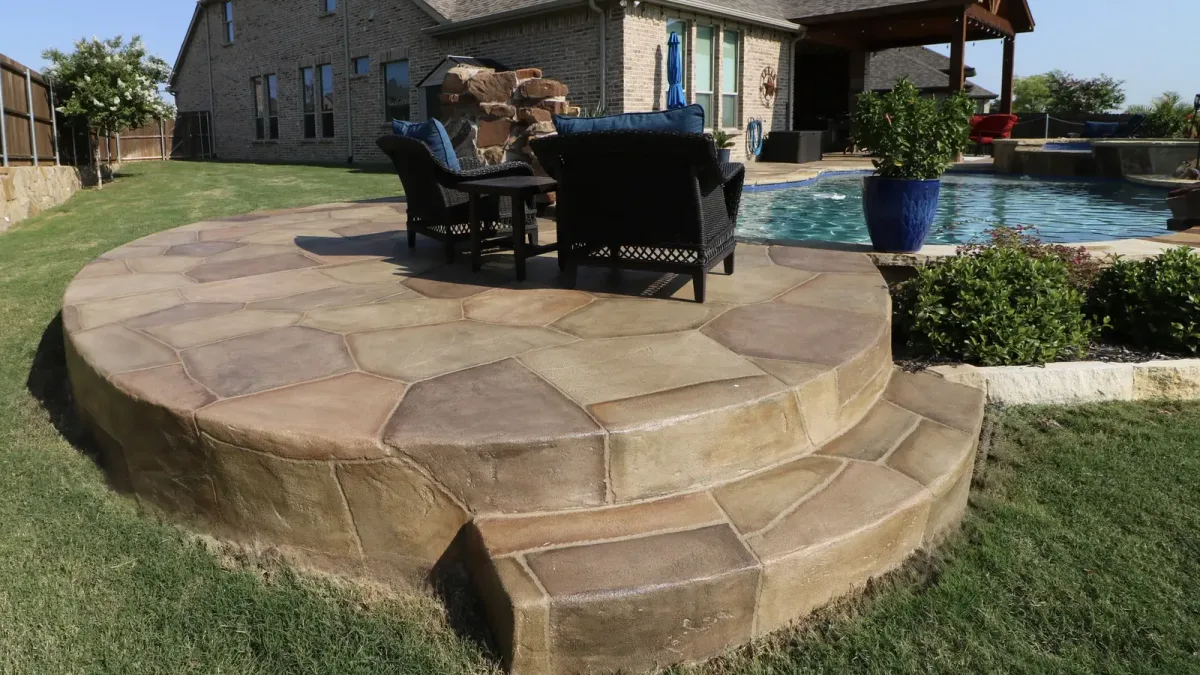
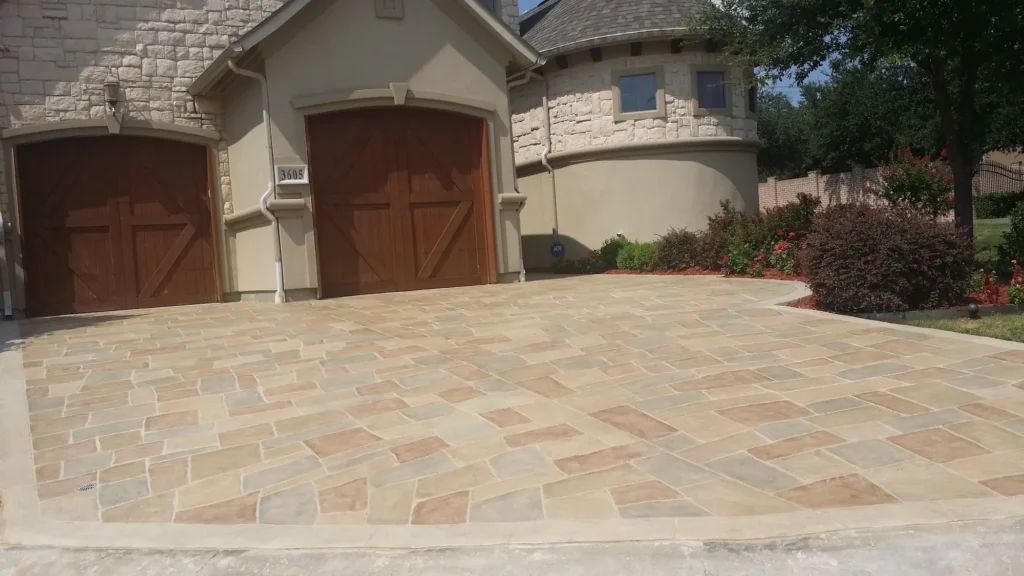
Concrete resurfacing typically lasts 7 to 15 years, although a properly installed resurfacing system can last longer with suitable maintenance and favorable conditions. Its lifespan depends on the quality of the existing concrete, surface preparation, materials used, installation methods, weather exposure, and how frequently the surface is used.
For homeowners in North Texas, where concrete can experience intense summer heat, heavy rain, and occasional freezing temperatures, understanding these factors can help protect a resurfaced driveway, patio, pool deck, or walkway.
What Is the Average Lifespan of Concrete Resurfacing?
Concrete resurfacing generally lasts between 7 and 15 years, but the actual lifespan varies depending on the application and the conditions surrounding the surface. Some decorative resurfacing systems may last longer when installed over structurally sound concrete and maintained correctly.
Unlike replacing an entire concrete slab, resurfacing involves applying a specialized overlay to an existing surface. This restores its appearance and can improve its texture without requiring complete removal and replacement.
The lifespan of a resurfaced area depends on several important factors:
- Existing concrete condition: Stable concrete provides a better foundation for the resurfacing material.
- Surface preparation: Proper cleaning, repairs, and preparation help the overlay bond to the existing slab.
- Material quality: The resurfacing system must be suitable for the surface's intended use and environmental exposure.
- Installation quality: Correct application and curing help prevent premature deterioration.
- Maintenance practices: Regular cleaning and timely repairs can help preserve the finish.
- Environmental conditions: Sunlight, moisture, temperature fluctuations, and other weather conditions affect long-term performance.
Understanding these variables makes it easier to determine whether resurfacing is a practical investment for your property.
7 Factors That Affect How Long Concrete Resurfacing Lasts
1. The Condition of the Existing Concrete
The condition of the original concrete is one of the most important factors affecting resurfacing longevity. Because the overlay depends on the existing slab for support, the underlying concrete must be stable enough to support the new surface.
Concrete with minor surface imperfections, discoloration, or shallow wear may be a suitable candidate for resurfacing. However, severe structural cracks, significant movement, extensive deterioration, or major settling can create problems that a new overlay alone cannot resolve.
If the original slab continues to move, cracks may eventually appear through the resurfaced layer. Similarly, loose or deteriorating concrete can weaken the bond between the old surface and the new material.
Before resurfacing, the contractor should evaluate the existing concrete and determine whether repairs are necessary. Addressing underlying problems first can help extend the life of the finished surface.
Learn more about the process and its applications in this guide to what concrete resurfacing is.
2. Surface Preparation and Installation Quality
Even high-quality resurfacing materials can fail prematurely when the surface is not prepared correctly.
Before applying an overlay, the existing concrete typically needs to be cleaned thoroughly to remove dirt, grease, loose material, and other contaminants. Depending on the system and slab condition, additional preparation may be required to create a suitable bonding surface.
Any necessary repairs should also be completed before installation. Applying a resurfacing material over unstable concrete or leaving contaminants on the surface can interfere with adhesion and increase the risk of peeling, flaking, or separation.
Proper installation also involves following the manufacturer's recommendations for mixing, application thickness, curing, and environmental conditions.
Working with an experienced contractor helps ensure that these steps receive the attention they require. A well-prepared foundation and properly installed overlay can make a substantial difference in the surface's long-term durability.
You can learn more about LimeCoat's concrete resurfacing services to understand how resurfacing can refresh existing concrete.
3. The Quality and Type of Resurfacing Material
Not all concrete resurfacing systems are designed for the same applications. The materials used must match the surface's intended purpose, exposure, and expected traffic.
For example, a decorative overlay designed for a residential patio may have different performance requirements from a system used in a commercial setting with frequent foot traffic.
A suitable resurfacing system should account for factors such as:
- Expected pedestrian or vehicle traffic
- Resistance to ordinary wear and abrasion
- Exposure to rain, standing water, and sunlight
- Slip resistance requirements
- Compatibility with the existing concrete
- Desired color, texture, and decorative finish
The quality of the material matters, but choosing the right system for the application is equally important. A premium product may still underperform if it is installed in conditions for which it was not designed.
Ask your contractor which resurfacing system is appropriate for your property and what maintenance it requires. Understanding the material's limitations can help you establish realistic expectations for its lifespan.
4. Weather Conditions and Temperature Changes
Outdoor concrete surfaces are constantly exposed to changing weather conditions. In North Texas, prolonged summer heat, direct sunlight, intense rainfall, and occasional freezing weather can affect a resurfaced surface over time.
High temperatures and strong sunlight can place additional demands on exposed surfaces. Temperature changes can also cause concrete to expand and contract. If the underlying slab has existing weaknesses or continues to move, the overlay may eventually develop visible cracks or other imperfections.
Moisture is another important consideration. Water that enters existing cracks or reaches vulnerable areas can contribute to deterioration, particularly when freezing and thawing occur.
Proper drainage, suitable materials, and correct installation can help reduce these risks. However, no resurfacing system is completely immune to weather-related wear.
For homeowners planning an outdoor renovation, it is important to choose materials and finishes designed for the local climate rather than selecting an option based solely on appearance.
5. The Amount of Traffic and Daily Use
How frequently a resurfaced area is used can influence how quickly it wears.
A decorative patio used occasionally for outdoor dining may experience less abrasion than a driveway that supports multiple vehicles every day. Similarly, commercial concrete surfaces may need to withstand heavier foot traffic, equipment, deliveries, or repeated cleaning.
Different applications require different considerations.
Driveways: Vehicle weight, turning tires, oil spills, and repeated use can affect surface performance. Explore driveway resurfacing services for options to improve the appearance of worn concrete.
Patios: Outdoor furniture, foot traffic, food spills, and weather exposure can gradually affect the finish. Patio resurfacing can help refresh an existing outdoor living area.
Pool decks: Constant moisture, pool chemicals, sunlight, and bare-foot traffic make appropriate materials and surface texture especially important. Learn more about pool deck resurfacing.
Walkways: Regular foot traffic, dirt, water, and seasonal weather can contribute to gradual surface wear. Resurfacing may help restore the appearance of suitable existing paths through walkway resurfacing.
Selecting a system suited to the level of use can help prevent avoidable wear and support better long-term performance.

6. Maintenance and Cleaning Habits
Regular maintenance can help keep a resurfaced concrete surface looking good and make it easier to identify developing problems.
Dirt, leaves, grease, and other debris can accumulate on outdoor concrete. If these materials remain on the surface, they may contribute to staining or make the area more difficult to maintain.
A practical maintenance routine includes:
- Sweep the surface regularly to remove loose dirt and debris.
- Clean spills promptly, especially oil, grease, and other staining substances.
- Use cleaning products compatible with the resurfacing material.
- Avoid harsh chemicals or aggressive cleaning methods unless approved by the manufacturer.
- Check periodically for cracks, peeling, or areas where the overlay may be separating.
- Keep drainage paths clear to reduce unnecessary water accumulation.
- Follow the contractor's recommendations for resealing, if the system requires it.
Not every resurfacing system requires the same maintenance schedule. Some decorative finishes may benefit from periodic resealing, while others have different protective requirements.
Avoid applying a sealer simply because a certain number of years has passed. Confirm the appropriate product and timing with your contractor or the material manufacturer.
7. Curing Time and Early Use
The first few days after installation can influence the performance of a resurfaced surface.
Resurfacing materials need sufficient time to cure and develop the properties required for normal use. Walking or driving on the surface too early can damage the finish, leave marks, or interfere with the material's development.
The required curing period depends on the product, installation conditions, temperature, humidity, and intended use. A surface that is ready for light foot traffic may not yet be suitable for vehicles, heavy equipment, or furniture.
Follow the contractor's instructions carefully after installation. Avoid rushing to use the area simply because the surface appears dry.
Allowing the material to cure correctly helps protect the investment and reduces the risk of avoidable early damage.
How Long Does Concrete Resurfacing Last by Application?
Although the general lifespan of concrete resurfacing is often estimated at 7 to 15 years, different applications experience different types and levels of wear.
| Concrete surface | Important factors affecting lifespan |
| Driveways | Vehicle traffic, tire abrasion, oil stains, and weather exposure |
| Patios | Foot traffic, furniture movement, sunlight, and moisture |
| Pool decks | Water exposure, pool chemicals, slip resistance, and UV exposure |
| Walkways | Pedestrian traffic, drainage, weather, and surface wear |
| Interior floors | Foot traffic, abrasion, cleaning methods, and protective finishes |
| Commercial surfaces | Traffic volume, equipment loads, cleaning frequency, and maintenance |
These are general planning considerations rather than guaranteed lifespans for individual surfaces. Actual performance depends on the specific resurfacing system, the condition of the existing slab, and the quality of installation.
For businesses and property managers, commercial concrete resurfacing may be worth considering when suitable concrete needs a refreshed appearance without a complete replacement.
Can Concrete Resurfacing Last 20 Years?
Concrete resurfacing can potentially last 20 years or longer under favorable conditions, but this should not be treated as a standard expectation for every project.
Long-term performance depends on the quality of the underlying slab, the resurfacing material, the installation process, the environment, and ongoing maintenance.
A surface that receives limited traffic and remains structurally stable may perform well for many years. A heavily used driveway exposed to frequent moisture, temperature changes, and vehicle abrasion may need attention much sooner.
It is also important to distinguish between the lifespan of the overlay and the condition of the underlying concrete. A decorative finish may experience fading or localized wear while the slab remains serviceable. In other cases, structural problems in the original concrete can shorten the useful life of the resurfacing system.
Rather than relying on a single lifespan estimate, ask your contractor about the expected performance of the specific system being proposed, its maintenance requirements, and any applicable warranty limitations.

Signs That Your Resurfaced Concrete Needs Attention
Even a well-installed surface can develop signs of wear as it ages. Identifying problems early can help you determine whether maintenance, localized repairs, or more extensive work is necessary.
Watch for the following warning signs.
Cracks That Continue to Widen
Small surface imperfections may develop over time, but widening cracks can indicate movement in the underlying concrete. If cracks are spreading or reappearing after repairs, the cause should be investigated before applying another overlay.
Peeling or Flaking
Peeling, flaking, or sections separating from the concrete may indicate bonding problems, moisture-related issues, material deterioration, or improper installation.
The affected area should be assessed to determine whether the problem is localized or more widespread.
Fading and Discoloration
Sunlight, weather exposure, staining, and normal aging can affect the color of decorative resurfacing. Fading does not automatically mean that the overlay has failed structurally.
Depending on the system, cleaning, resealing, or refinishing may help improve the appearance.
Persistent Water Accumulation
Water collecting in the same location may point to drainage problems or depressions in the surface. Standing water can contribute to staining and may increase deterioration risks in vulnerable areas.
Addressing drainage issues can help protect the surface and improve usability.
Widespread Surface Deterioration
If large areas show cracking, separation, or substantial wear, a contractor should evaluate the surface before recommending another resurfacing layer.
Resurfacing is most effective when the existing concrete provides a suitable foundation. If the slab has serious structural damage, more extensive repairs or replacement may be necessary.
Is Concrete Resurfacing Worth It Compared With Replacement?
Concrete resurfacing can be a cost-effective way to improve the appearance of existing concrete without removing and replacing the entire slab. However, whether it is the right option depends on the condition of the concrete and your long-term goals.
Resurfacing may be suitable when the existing slab is structurally sound but has cosmetic imperfections, surface wear, or an outdated appearance.
Potential benefits include:
- Improving the appearance of worn or discolored concrete
- Offering decorative colors, textures, and patterns
- Reducing the need for full slab removal when replacement is unnecessary
- Refreshing outdoor living spaces and other concrete areas
- Extending the useful life of suitable existing concrete
Replacement may be more appropriate when the slab has extensive structural cracking, major settling, significant movement, or deterioration that cannot be corrected reliably through resurfacing.
A new overlay cannot resolve every underlying concrete problem. A professional evaluation can help determine which approach offers the best balance of cost, durability, and long-term performance.
If you are considering different finishes for your property, explore these concrete resurfacing ideas for inspiration.
How to Extend the Life of Concrete Resurfacing
You cannot eliminate all wear, but consistent care and appropriate installation practices can help maximize the lifespan of a resurfaced surface.
Consider the following recommendations:
- Start with a professional assessment. Confirm that the existing concrete is suitable for resurfacing before installation begins.
- Choose the right system. Select materials that match the surface's intended use and exposure conditions.
- Prepare the concrete properly. Ensure that cleaning, repairs, and surface preparation are completed as required.
- Follow curing instructions. Keep traffic off the surface for the recommended period.
- Clean the surface regularly. Remove dirt, debris, spills, and other contaminants before they cause persistent staining.
- Manage water effectively. Maintain drainage and address recurring water accumulation.
- Inspect the surface periodically. Look for cracks, peeling, or other changes that may require attention.
- Follow recommended sealing procedures. If the system requires a protective sealer, use the appropriate product and application schedule.
For additional guidance about available applications and finishes, visit the LimeCoat services page.
Refresh Your Concrete With a Resurfacing Solution Built to Last
Concrete resurfacing typically lasts 7 to 15 years, with actual performance depending on the slab's condition, material selection, installation quality, and maintenance. Choosing the right system and addressing underlying problems before installation can help you get more value from your investment.
LimeCoat helps property owners explore options for improving existing concrete with decorative resurfacing. Learn more about LimeCoat, browse the project gallery, or request a quote to discuss your concrete resurfacing project. You can also contact the team to learn more about available solutions.