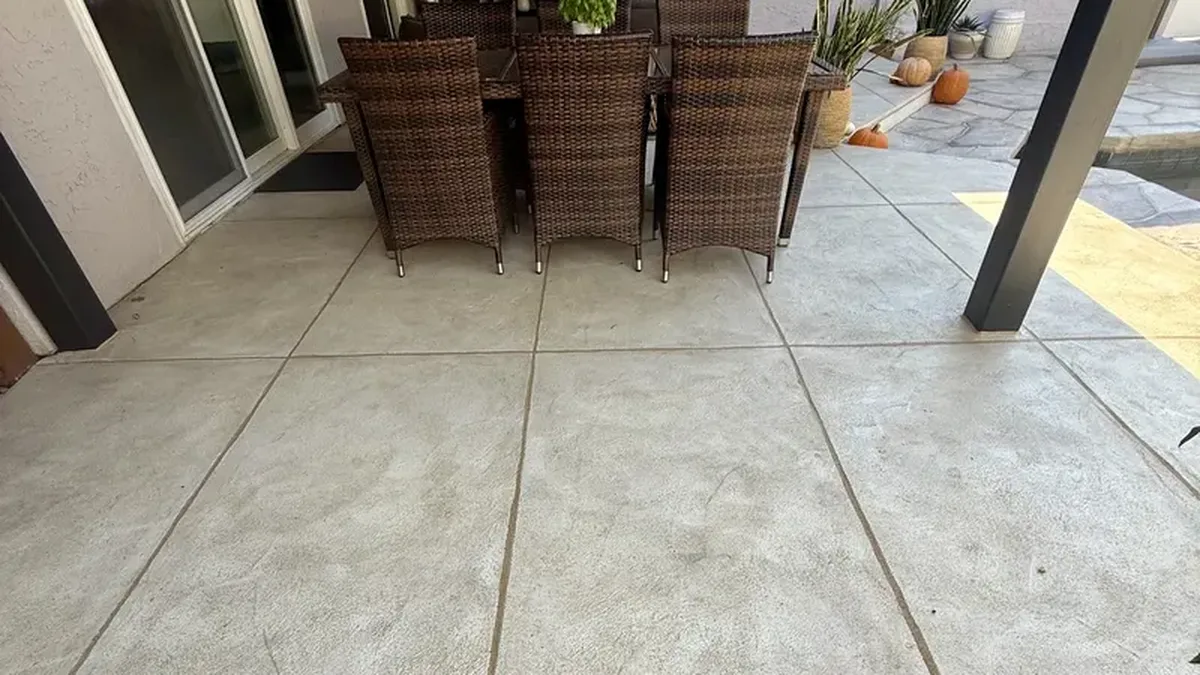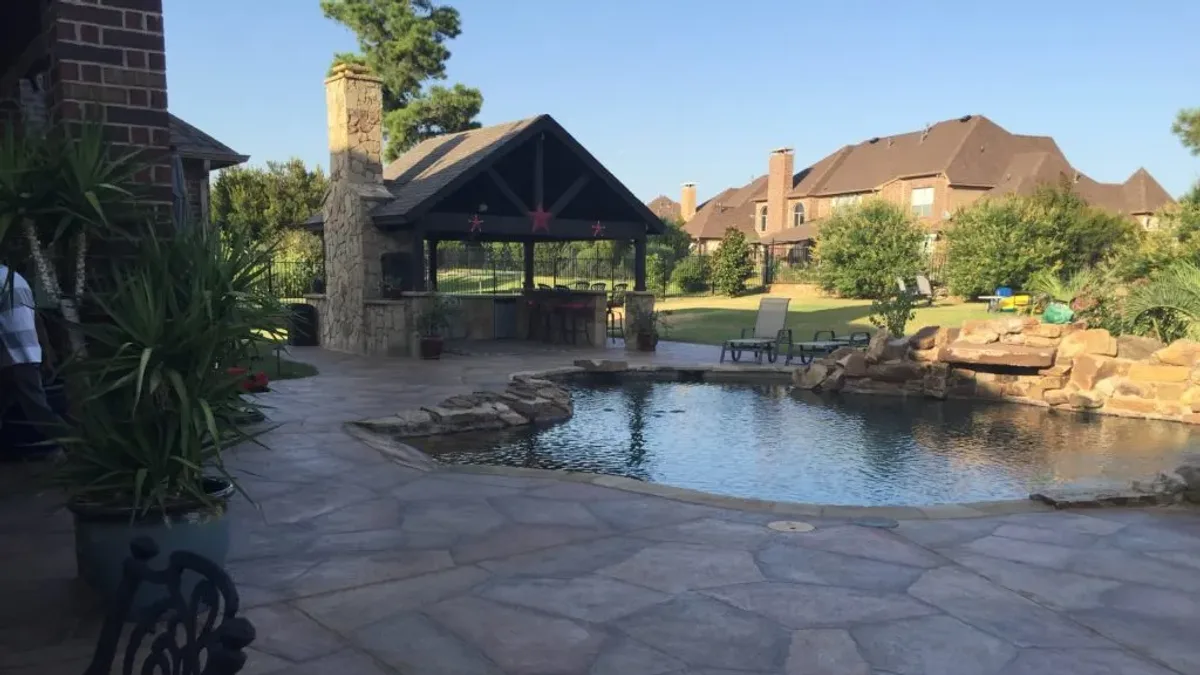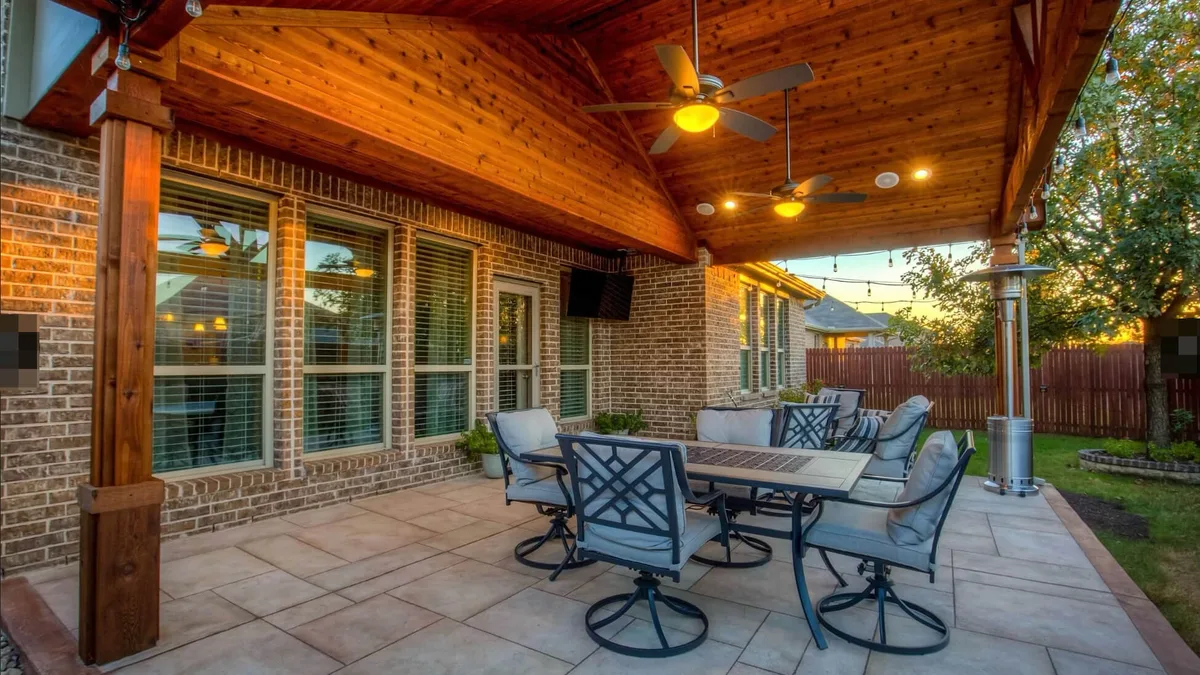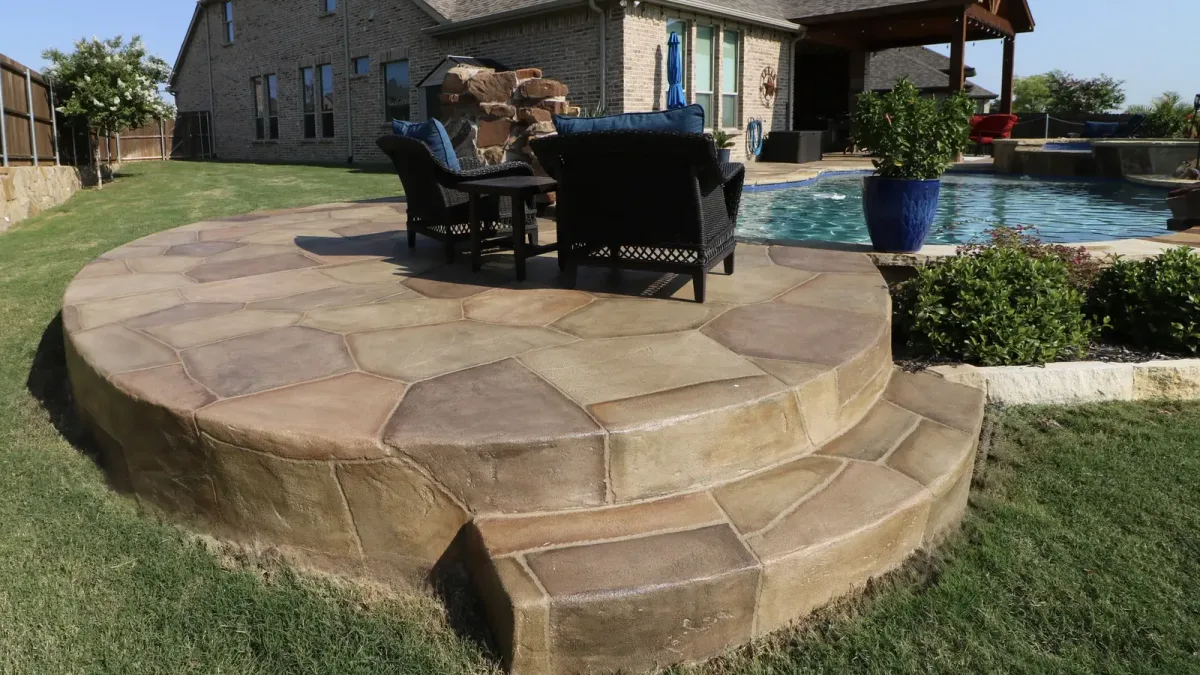
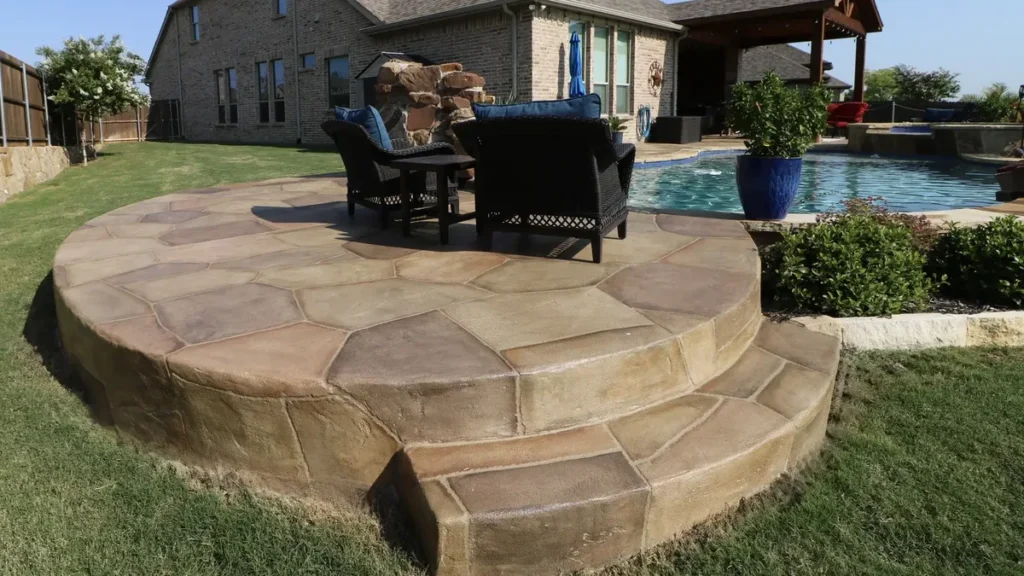
Concrete resurfacing ideas can help you transform worn, outdated surfaces into attractive spaces with decorative stone patterns, custom colors, textured finishes, and modern designs. Whether you want to upgrade a driveway, refresh a patio, improve a pool deck, or create an eye-catching fireplace, resurfacing offers a way to change the appearance of suitable existing concrete without necessarily removing the entire slab.
For homeowners and businesses in Dallas-Fort Worth, decorative resurfacing can also help create a more cohesive look across indoor and outdoor spaces.
1. Create a Natural Stone Look for Your Concrete Driveway
A driveway is one of the first things people notice when approaching your home. If your existing concrete looks faded, stained, or outdated, resurfacing it with a natural stone-inspired finish can dramatically improve your property’s curb appeal.
Consider a design that resembles flagstone, irregular stone slabs, or traditional masonry. These patterns can give a plain concrete driveway a more distinctive appearance without requiring the installation of individual stone pieces.
Color also plays an important role in the overall design. Earthy browns, warm grays, charcoal accents, and muted beige tones can complement different architectural styles. For a modern home, a combination of gray shades may create a clean appearance, while warmer colors can suit traditional brick or stone exteriors.
When choosing a driveway finish, consider vehicle traffic, surface maintenance, and the existing condition of the concrete. The underlying slab must be suitable for resurfacing to achieve a durable result.
Explore LimeCoat DFW’s driveway resurfacing services to discover ways to give an existing driveway a customized decorative finish.

2. Transform Your Patio Into an Outdoor Living Space
A patio should be an inviting place to relax, entertain guests, and enjoy time outdoors. However, plain or deteriorating concrete can make the entire backyard feel less appealing.
One concrete resurfacing idea is to create a stone-inspired patio that complements your outdoor furniture, landscaping, and home’s exterior. A handcrafted pattern can help the patio look more sophisticated without the complexity of installing individual paving stones.
You can also coordinate the patio finish with nearby walkways or pool decks to create a consistent design throughout the backyard.
For example, a warm stone pattern can complement wooden furniture and natural landscaping, while a cooler gray finish can suit contemporary outdoor seating and minimalist garden designs.
Before selecting a finish, consider how you plan to use the patio. An area used for dining may benefit from a relatively easy-to-clean surface, while an entertainment area may call for a decorative pattern that becomes a focal point.
Learn more about patio resurfacing options to explore ways to refresh your existing outdoor living area.
3. Give Your Pool Deck a Resort-Inspired Appearance
Your pool deck can influence the overall atmosphere of your backyard. An old, discolored, or unattractive surface may make the area feel dated, even if the pool itself is in excellent condition.
Resurfacing provides an opportunity to create a more inviting poolside environment with decorative patterns and colors that complement the water, landscaping, and outdoor furniture.
Consider a light stone-inspired finish for a bright, open appearance or a subtle combination of beige and gray for a more natural look. A textured decorative pattern can add visual interest while helping distinguish the pool deck from surrounding surfaces.
Practical considerations are especially important around swimming pools. Choose a finish designed for the expected moisture exposure and ask about slip resistance, surface temperature, drainage, and cleaning requirements. No decorative finish should be assumed to be slip-proof when wet.
The existing pool deck should also be inspected for structural damage, movement, and drainage problems before resurfacing begins.
If you want to update your poolside area, explore pool deck resurfacing by LimeCoat DFW for ideas suited to your outdoor space.
4. Add Decorative Borders to Define Different Areas
A decorative border is a simple design concept that can make a resurfaced concrete area look more intentional.
Instead of using the same pattern across the entire surface, consider incorporating a contrasting border around the edges of a driveway, patio, or walkway. For example, a light stone-inspired pattern in the center could be paired with a darker border to create a framed appearance.
Borders can also help define different functional areas. A patio seating zone might feature a distinct outline, while a walkway could use a contrasting edge to complement nearby landscaping.
When planning this design, keep the color palette consistent with the surrounding architecture. Too many contrasting colors or patterns can make a small space look busy.
A professional installer can help determine whether the selected resurfacing system supports the desired border design and how it can be incorporated into the existing layout.
5. Refresh Old Walkways With Stone-Inspired Patterns
Walkways connect important areas of your property, including the driveway, front entrance, garden, and backyard. Although they may seem like minor features, their appearance can influence the overall look of your home.
Resurfacing a plain walkway with a decorative stone pattern can create a more welcoming entrance and complement other exterior improvements.
For a traditional home, consider an irregular stone design with warm, natural colors. For a contemporary property, a more uniform pattern with gray or neutral tones may be a better fit.
You can also coordinate the walkway with your driveway or patio to create a unified design. Using complementary finishes helps different areas feel connected without requiring every surface to look identical.
Keep safety and usability in mind when selecting a pattern. The walkway should remain comfortable to use, and any existing trip hazards, uneven slabs, or drainage issues should be addressed separately.
Explore walkway resurfacing services to find ways to improve the appearance of your property’s paths.
6. Turn Your Fireplace Into a Decorative Focal Point
Concrete and masonry resurfacing can also improve interior spaces. An outdated fireplace surround, for example, can become a prominent design feature with the right decorative finish.
A stone-inspired fireplace can add texture and visual interest to a living room, family room, or other gathering space. Depending on your home’s interior design, you might choose warm beige tones, layered gray shades, or a finish that complements existing brick and wood features.
For a modern interior, a restrained color palette can create a clean, sophisticated appearance. In a more traditional space, natural-looking patterns and warmer colors may help create a comfortable atmosphere.
Before selecting a material, verify that the resurfacing system is suitable for the fireplace application and the expected heat exposure. Decorative finishes around fireplaces must comply with applicable clearances and manufacturer requirements.
If you want to update an existing fireplace surround, learn more about fireplace resurfacing services.

7. Upgrade Interior or Exterior Walls With Decorative Finishes
Walls offer another opportunity to use resurfacing creatively. Rather than limiting decorative treatments to floors and outdoor concrete, consider using a stone-inspired finish to improve an accent wall, entryway, or suitable exterior masonry surface.
Inside the home, a decorative wall can create a focal point behind a seating area or complement an existing fireplace. Outside, resurfacing can help coordinate the appearance of a facade with the driveway, patio, and other architectural elements.
The key is choosing a finish that suits the scale of the space. A heavily patterned wall may work well as a feature, while a more subtle finish may be preferable across a larger area.
For exterior applications, consider exposure to sunlight, rain, moisture, and other environmental conditions. The selected material must be appropriate for the wall substrate and installation environment.
Explore wall resurfacing services for ideas on refreshing suitable interior and exterior surfaces.
8. Choose a Coordinated Color Scheme for Multiple Surfaces
One of the most effective concrete resurfacing ideas is to plan several surfaces together instead of treating each project separately.
For example, you could coordinate your driveway, front walkway, patio, and pool deck using related colors and complementary patterns. The designs do not have to be identical. A consistent color palette can create visual harmony while allowing each area to serve a different purpose.
Here are three color combinations to consider:
- Warm and natural: Beige, sand, brown, and soft cream tones work well with traditional architecture, wood features, and natural landscaping.
- Modern and understated: Light gray, charcoal, and muted neutral shades can complement contemporary homes and minimalist outdoor spaces.
- Classic and balanced: Medium gray paired with subtle tan accents can provide flexibility across different architectural styles.
When comparing samples, view them alongside your home’s exterior materials and landscaping. Colors can look different depending on sunlight, shade, and nearby surfaces.
You should also consider how the finish will look when dry and wet, particularly around pool decks and outdoor entertainment areas.
LimeCoat DFW offers customized decorative finishes, including hand-carved and hand-colored designs intended to create a realistic stone appearance. Visit the About LimeCoat DFW page to learn more about its resurfacing approach.
9. Improve Commercial Entrances and Walkways
Concrete resurfacing is not limited to residential properties. Businesses can use decorative finishes to improve storefronts, building entrances, walkways, and other suitable concrete or masonry surfaces.
A well-maintained entrance can create a more professional first impression for customers, employees, and visitors. A decorative finish can also complement a building’s exterior and help create a consistent appearance across the property.
For a retail business, a clean, coordinated entrance may enhance the overall customer experience. Office buildings can benefit from refreshed walkways and architectural features that look more inviting.
Commercial projects require careful planning around foot traffic, cleaning procedures, accessibility, and potential downtime. The resurfacing system should be appropriate for the intended use and expected wear.
For larger properties, consider prioritizing the entrance and other highly visible areas before updating less prominent surfaces.
Learn more about commercial concrete resurfacing to explore options for improving suitable business surfaces.
10. Refresh Existing Concrete Instead of Automatically Replacing It
Sometimes the best resurfacing idea is to preserve the existing concrete and improve its appearance rather than starting over.
If your driveway, patio, walkway, or pool deck looks outdated but remains structurally sound, a decorative overlay may offer a practical renovation option. Depending on the material and the condition of the slab, resurfacing can reduce the need for extensive demolition and help transform the surface with a new design.
This approach is particularly useful when you want to update several areas without undertaking a complete concrete replacement project.
However, resurfacing is not appropriate for every slab. Significant movement, severe structural cracking, extensive deterioration, or unresolved moisture problems may require substantial repairs or replacement.
A professional assessment can help determine whether your existing concrete is a suitable candidate and which decorative options are appropriate.
For an overview of available solutions, visitLimeCoat DFW’s concrete resurfacing page.
How to Choose the Right Concrete Resurfacing Idea
With so many design possibilities, selecting a finish can feel overwhelming. Start by identifying the main purpose of the project and the appearance you want to achieve.
Consider these factors before making a decision:
- Existing surface condition: Determine whether the concrete is structurally suitable for resurfacing.
- Location: Driveways, patios, walls, and pool decks have different performance requirements.
- Architectural style: Choose colors and patterns that complement your property rather than compete with it.
- Maintenance: Ask about cleaning, sealing, and long-term care requirements.
- Safety: Consider traction, drainage, and accessibility, especially in areas exposed to water.
- Budget: Compare the full project scope, including preparation, repairs, materials, and installation.
- Professional experience: Review previous projects and ask how the contractor prepares surfaces and addresses potential problems.
It is also helpful to gather reference photos before a consultation. These examples can help communicate your preferred colors, textures, and patterns, making it easier to develop a design that suits your property.
Transform Your Existing Concrete With a Design That Fits Your Property
Concrete resurfacing offers creative ways to refresh driveways, patios, pool decks, walkways, walls, and other suitable surfaces. By choosing complementary colors, decorative patterns, and an appropriate resurfacing system, you can improve your property’s appearance without automatically replacing the existing concrete.
Ready to explore your options?Contact LimeCoat DFW orrequest a quote to discuss your project and find a finish that fits your space.